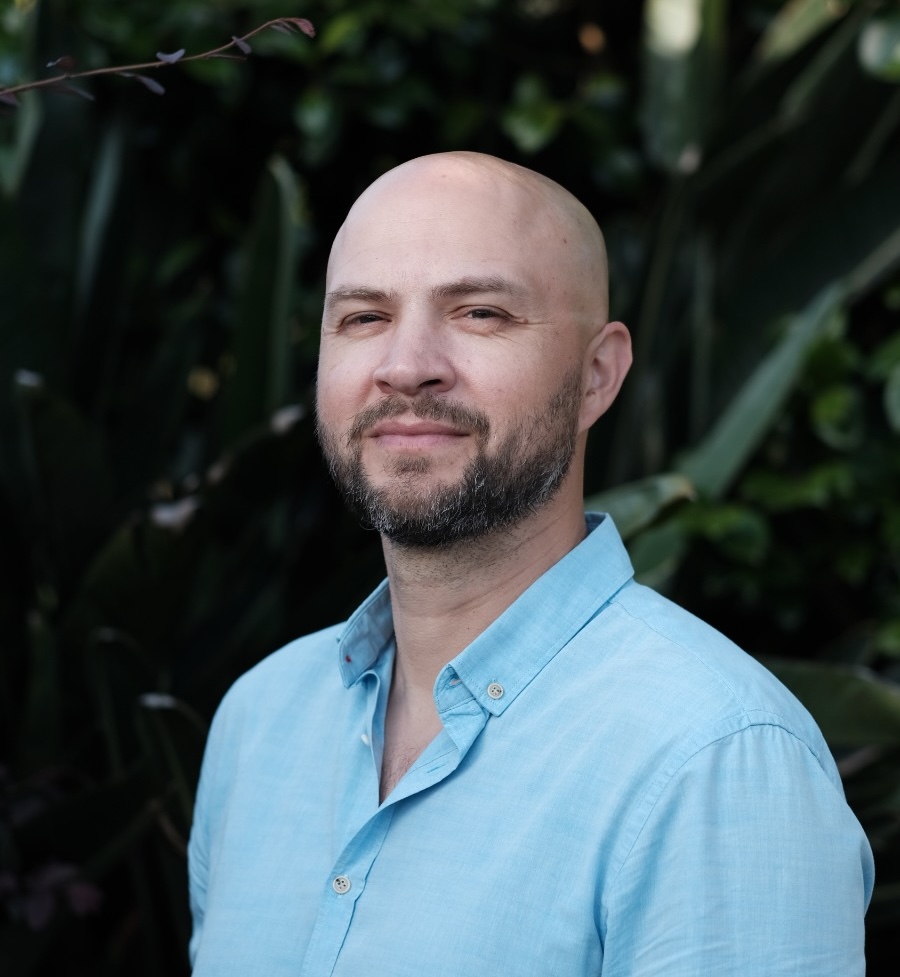
The questions that have guided me throughout my life have stayed remarkably consistent.
Why do some people move through life confused, disconnected or distressed, without ever receiving an explanation that helps them understand themselves?
Why do some lives become constrained not by a lack of intelligence, character, effort or potential, but by a lack of understanding?
I have been asking versions of these questions for more than thirty years.
Long before I became an educational psychologist, it seemed obvious to me that many people were living inside explanations, when they existed, that did not quite fit. They often knew something was different. Their families sometimes knew. Their teachers, friends and colleagues often knew. Yet nobody could say what it was.
The person was frequently the last to understand, despite knowing that something was off.
This has always troubled me. Not because life is or should be easy; suffering spares no one. Not because uncertainty can be eliminated; it cannot. But because so much suffering seems to come from people finding their way through life without an adequate map of themselves, let alone of the territory.
A human brain is in a peculiar position. Locked inside the darkness of the skull, it never meets the world directly. It has to infer and interpret. It makes sense of itself, of other people and of the world from incomplete information. Sometimes those interpretations are good enough to support a good life. Sometimes they are not.
Much of my work has been helping people build better interpretations: ones that make more sense, are more precise, more humane and more useful than a low-resolution label.
I have done this work as an educational psychologist in England for twelve years, and in Portugal in a TEIP school, part of the country's programme for schools serving communities with the greatest social and economic disadvantage. In Canada, I worked as a hepatitis C support counsellor with people with addictions, a support worker with students and young people, and a crisis worker. The people I have worked with range from very young children to older adults. Across hundreds of assessments, conversations and observations, I have seen the same thing again and again: when people understand themselves better, and share that understanding with those around them, possibilities open up that were hidden before. When they do not, suffering and its attractors take over.
This is the foundation of Bounded Uncertainty. At its heart, it is a project of interpretability, of making sense. It exists to help people understand themselves, understand one another, and live with life's uncertainty with greater, ruthless self-awareness.
The work draws heavily on science: the free energy principle, active inference, the theory of constructed emotion, predictive processing, complexity science, the science of learning, and research on flexibility and resilience. But science alone is not enough. Experience matters. Intuition matters. Culture matters. The tools we make, the objects we keep, the places we live in and the people we share our lives with all contribute to who we become.
Educational psychology is where this work began. The Companion and the experiments in the Lab are where it is going.
I want to contribute to a world in which understanding is easier to find, to share and to express. A world in which fewer people spend years believing they are broken, when a better understanding of themselves and their circumstances would tell a different story.
A world in which human differences become more interpretable, more intelligible, and more compatible with a life worth living.
That is why I created Bounded Uncertainty, and it is the work I hope to continue for the rest of my life.
Ricardo